How to Set Stop Losses Without Emotion
The emotional way to set a stop: pick a dollar loss you can tolerate, and place the stop there. The market is indifferent to your tolerance. If your tolerance and the market’s structure disagree, the stop gets picked off — repeatedly.
Emotion-free stop placement flips the order.
The four-step process
1. Identify structure first, ignoring size
Look at the chart. Where does the thesis break? That is the invalidation level — the price at which the reason you opened the trade is no longer true. It might be a swing low, a range boundary, a moving average that the trade depends on, a support/resistance level.
Do not pick a round number. Do not pick “1% below entry”. Pick where the narrative breaks.
2. Place the stop slightly beyond the invalidation
A stop at structure gets picked off by noise. A stop slightly beyond it (usually 0.5–1x average true range beyond the structural level) captures noise while still executing when the level actually breaks.
3. Compute the dollar risk from the stop
Only now — after the stop is set from structure — compute the dollar risk it implies. Divide account risk (say 1%) by that stop distance to get the position size.
Position size is the variable that adjusts to structure. The stop is not.
4. If the required size is too small to matter — skip the trade
If a structure-based stop forces a position size so small it feels pointless, that is not a reason to tighten the stop. That is the market telling you the trade’s risk-reward is bad for you at this moment. Pass.
What NOT to do
- Do not set the stop at a dollar amount that “feels okay” and then rationalise it as structural.
- Do not tighten the stop mid-trade because the loss looks large.
- Do not set the stop at the exact structural level; noise will hit it.
- Do not set the stop with round numbers (“$50 flat”) when structure is at $50.32.
How EI ALGOS helps
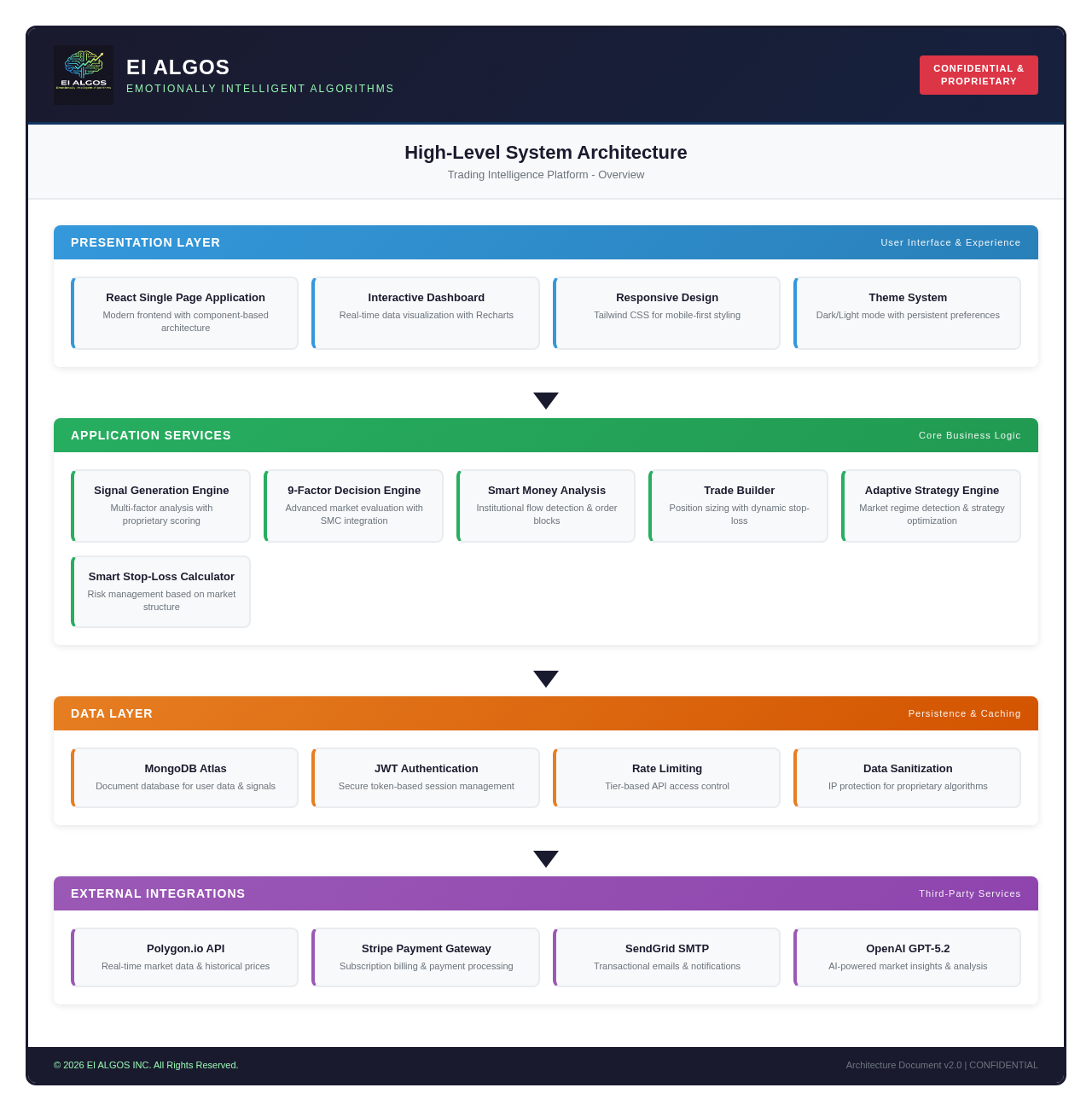
The Decision Score checks whether the stop is at structure or at a comfort distance from entry. Stops that are comfort-anchored score lower on the risk factor. See also Emotion Score for how emotional-state signatures affect stop discipline.
EI ALGOS is an educational decision-support platform. Nothing in this article is investment advice.
Related reads
How Professional Traders Manage Emotion
Professional traders are not emotionless — they are structurally protected from acting on emotion. Here is what actually works, drawn from prop firms and institutions.
Deliberate Practice for Traders
Ten thousand hours of screen time does not make a trader. Ten thousand hours of *deliberate practice* does. Here is what that actually looks like.
How to Write a Trading Plan You Actually Follow
Most trading plans fail not because they are wrong, but because they are unfollowable. Here is the minimum structure of a plan that survives contact with the market.
How to Review a Trade Honestly
The trade review is where compounding happens or dies. Here is how to review honestly — separating decision quality from outcome — in fifteen minutes a day.