Status Quo Bias in Position Management
Status quo bias is the tendency to prefer inaction over action, even when action is clearly better. In trading, it is the reason many portfolios contain positions that no one would open today, held only because they were opened yesterday.
Why it happens
Every decision — even the decision to keep a position — carries a cognitive cost. When a position is already open, the brain treats “leave it alone” as the default, and any change requires overcoming inertia. So positions drift on without honest re-evaluation.
The result: a portfolio slowly fills with positions that were justified at entry but are no longer justified today.
The tax
Status quo bias does not usually blow up an account in a single trade. It taxes returns quietly, across dozens of positions:
- Winners that should have been added to are left flat.
- Losers whose theses have broken are left open.
- Rotation to fresher setups does not happen because “there’s no capital to deploy” — capital is trapped in status-quo holdings.
The fix — active review
Two rules break the bias.
- Weekly full-portfolio review. Every position, restated forward. If you would not open it today at the current price and thesis, it closes.
- The “if I closed everything, what would I open?” exercise. Once a month, imagine your portfolio starts flat. Write the trades you would open today. Compare to what you actually hold. The gap is the status-quo tax.
How EI ALGOS helps
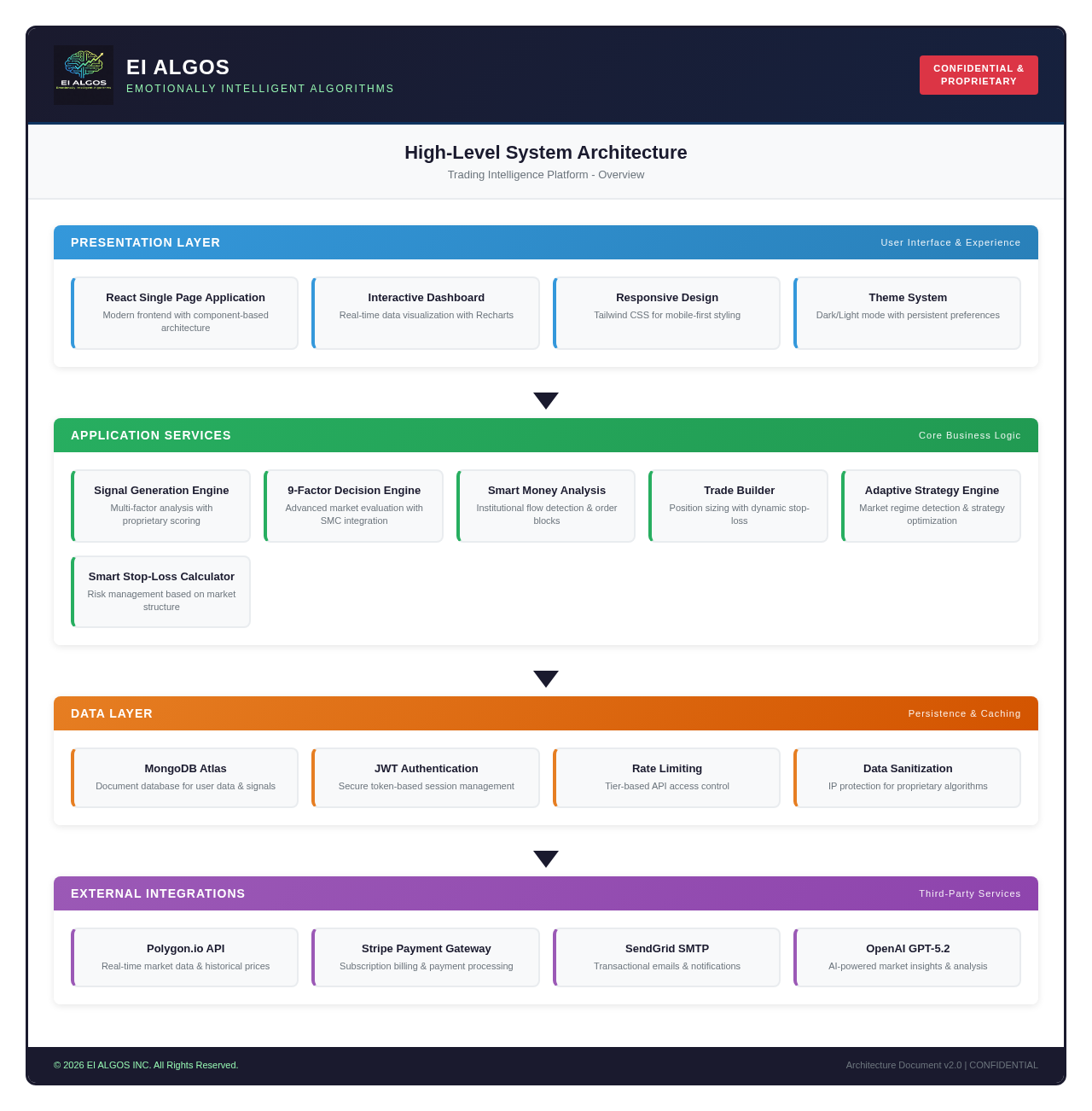
The platform’s Trading Journal is designed around the review flow: every position surfaces with its entry-time Decision Score and thesis, so the trader can compare against current conditions in seconds. LIANA can be asked to summarise which open positions have theses that no longer look like the ones the trader opened them with.
EI ALGOS is an educational decision-support platform. Nothing in this article is investment advice.
Related reads
How Professional Traders Manage Emotion
Professional traders are not emotionless — they are structurally protected from acting on emotion. Here is what actually works, drawn from prop firms and institutions.
Deliberate Practice for Traders
Ten thousand hours of screen time does not make a trader. Ten thousand hours of *deliberate practice* does. Here is what that actually looks like.
How to Write a Trading Plan You Actually Follow
Most trading plans fail not because they are wrong, but because they are unfollowable. Here is the minimum structure of a plan that survives contact with the market.
How to Review a Trade Honestly
The trade review is where compounding happens or dies. Here is how to review honestly — separating decision quality from outcome — in fifteen minutes a day.